

Klemp Strives to Connect Students as Apprenticeships Take Flight
Once a quiet alternative, apprenticeships today are a fast-growing force in the modern workforce.
Across the United States, more than 415,000 young people ages 16 to 24 are placed in internships, which have grown by 85% to meet rising demand from both students and employers. The outcomes are equally compelling: 94% of apprentices remain employed after completing their programs, and graduates can earn more than $300,000 in additional lifetime income.
In a moment when industries are searching for skilled talent – and students are rethinking traditional college routes – apprenticeships are emerging as one of the most effective ways to bridge education and employment.
For Joshua Klemp, that moment isn’t just a trend. It’s the work.
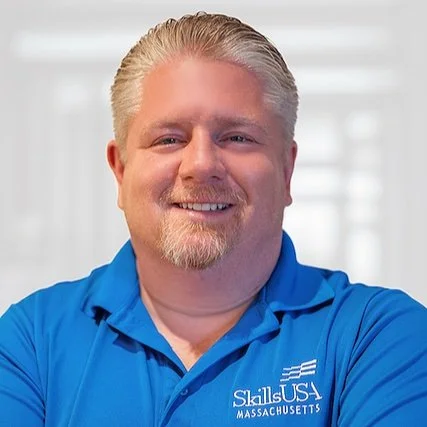
As apprenticeship connections specialist for SkillsUSA Massachusetts, Klemp is turning that national momentum into real opportunities for students across the Commonwealth – connecting them to careers before they even graduate.
A connector at the center of it all
Klemp’s role focuses on building something that doesn’t always happen naturally: strong, consistent connections between schools and industry.
Through the SkillSync Apprenticeship Connections Program, he works with SkillsUSA members, instructors, employers and sponsors to create clear pathways from career and technical education (CTE) programs into registered apprenticeships.
“The goal is to get students a foot in the door,” Klemp said. “So when they apply for an apprenticeship, they’re not just another name. They’re someone the employer already knows.”
That “foot in the door” can take many forms, from job shadows and internships to early engagement with unions or companies and participation in SkillsUSA programs. The end result is a student who is not only workforce ready, but known.
Klemp often describes apprenticeship providers as scouts looking for talent. SkillSync helps ensure they’re seeing the right students – and that those students are ready.
“We want to give students access,” he said. “And we want to remove barriers.”
Why apprenticeships – and why SkillsUSA
The renewed focus on apprenticeships is about more than numbers. It’s about fit.
For students, apprenticeships offer a way to earn while they learn and gain real-world experience, while also following a career path that avoids the heavy debt that can come with traditional four-year degrees. For employers, apprenticeships offer a direct pipeline to develop talent in industries facing persistent workforce shortages.
And for SkillsUSA, they align perfectly with the organization’s mission.
“Students are learning their technical skills in the classroom,” Klemp said. “What we’re doing is helping them build the leadership and workplace skills that make them stand out.”
Through programs like Career Essentials and newer tools such as Pathful, SkillsUSA equips students with the professional skills – “soft skills” such as communication, teamwork and professionalism – that employers consistently say matter most.
That combination of technical training and employability skills is powerful.
“Students in SkillsUSA programs are ready for the job on Day One,” he said.
Experience that shapes the work
Klemp brings both professional and personal experience to the role.
He previously served as state director for SkillsUSA Rhode Island, where he led programming, supported instructors and worked closely with industry partners. Long before that, he was a SkillsUSA student himself, competing in culinary arts.
That full-circle connection shapes how he approaches his work today.
“I know what it’s like to be in the trenches,” he said. “I know what teachers are managing, what students need and how SkillsUSA fits into that ecosystem.”
It also means he understands the timing and realities of school systems, an insight that has proven critical as he builds SkillSync. One early lesson came during the rollout of an apprenticeship partnership in southeastern Massachusetts. The program was ready, but many students had already secured co-ops or placements for the year.
“We realized quickly that we need to connect with schools earlier,” Klemp said. “You have to meet them where they are.”
That kind of adjustment is part of building something new, and he approaches it with both urgency and patience. A key part of his work is outreach, often starting with cold calls to employers and organizations that might not yet be connected to SkillsUSA. The goal is to show them what’s possible, starting with a pipeline of motivated, prepared students.
One early success is a partnership with the Family Service Association in Fall River, which is helping launch an early childhood apprenticeship model. The program combines on-the-job training, SkillsUSA participation, and employability development, with a commitment to hire participating students.
It’s a model Klemp hopes to expand across other sectors.
“These apprenticeship programs need talent,” he said. “And our students are exactly who they’re looking for.”
Even as he balances this role alongside his full-time position as executive director of Newport Pride, Klemp remains deeply connected to the SkillsUSA mission.
“You do SkillsUSA because you love it,” he said. “There’s a fire there.”